Mold Removal After Water Damage
A flood, a burst pipe or a roof leak doesn't automatically mean mold — but the window to prevent it is short, and once it's passed, removal is a different job than cleanup.
The 24–48 hour window
Mold can begin growing on wet drywall within roughly 24 to 48 hours of water exposure. If the affected area is properly dried inside that window — standing water removed, wet materials taken out, air genuinely moving until everything is dry, not just surface-dry — there's a real chance of avoiding a mold problem entirely. Past that window, particularly with drywall or carpet padding that stayed wet, it's reasonable to assume some growth has started even before anything is visible.
The full version of what to do in that window, including what actually counts as "dry," is covered in what to do after a basement flood. This page is about what happens if that window has already passed, or if it's clear the drying wasn't enough.
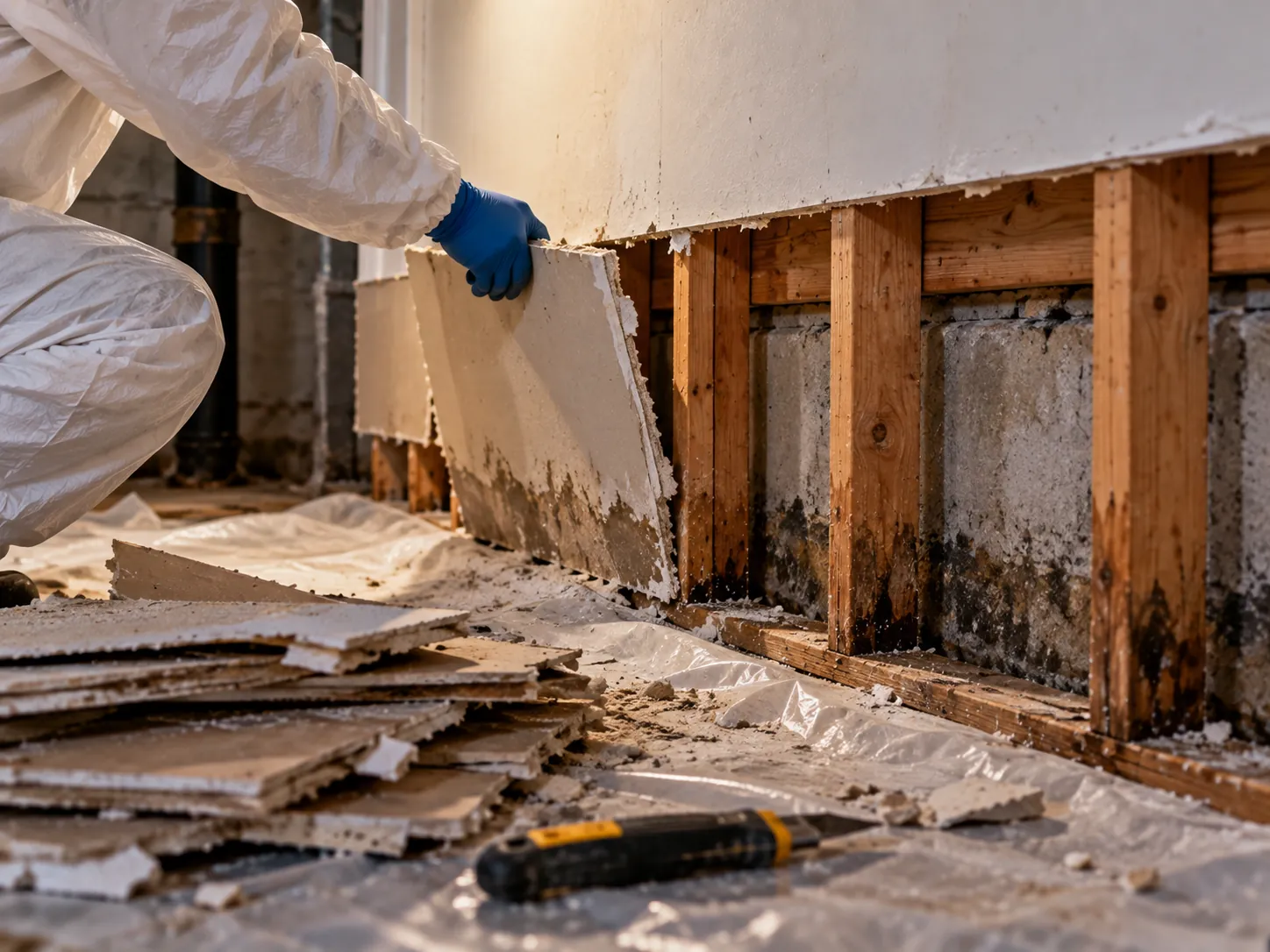
Removal after water damage, specifically
The underlying removal process is the same, but a job that starts from a known water event has its own considerations.
- The timeline is usually known. Unlike mold discovered with no obvious cause, you generally know when the water event happened — which matters for working out how far growth has likely spread by now.
- Materials may already need replacing regardless of mold. Drywall, insulation and carpet padding that were saturated often need to come out for water-damage reasons alone, whether or not mold has started — removal and water-damage cleanup frequently overlap in scope.
- West Roxbury's older housing stock floods for structural reasons, not bad luck. A basement that floods once, given how much of the area sits on fieldstone or rubble foundations predating the 1960s, is often saying something about drainage rather than reporting a one-off event — worth understanding before the next heavy rain.
- Documentation matters more here. If insurance is involved, photos from right after the event and a written scope from the assessment are what an insurer typically wants to see.
If the water is happening right now
This page assumes the water event has already happened. If it's actively ongoing — a pipe still leaking, water still coming in — what to do in the first hours covers the immediate steps before anything else.
Questions about mold after water damage
I dried everything out within 48 hours — do I still need this?
Not necessarily, and that's worth saying plainly rather than pushing a service you might not need. If drying was thorough — water fully removed, wet materials out, air moving until everything was genuinely dry, not just surface-dry — there's a real chance no mold ever started. Watch for a musty smell over the following weeks; if nothing shows up, you may be in the clear.
It's been longer than 48 hours since the water — what changes?
Past that window, particularly with drywall or carpet padding that stayed wet, assume some growth has started even if you can't see it yet. That doesn't mean extensive damage, but it does mean an assessment is worth it rather than waiting to see if a smell develops.
Does insurance typically cover this?
It depends on the cause, and policies differ. Mold resulting from a sudden, covered event like a burst pipe is more often covered; mold from a leak that went unrepaired for a long time usually isn't. Photos from right after the event and a written scope from an assessment are the usual documentation an insurer will ask for.
Free assessment, whatever stage you're at
Whether you're not sure if the drying was thorough enough or you already know growth has started, describe what happened and you'll get a straight answer.