Black Mold Removal
"Black mold" gets treated like a special case. In terms of how it actually gets removed, it mostly isn't — here's what's true and what isn't.
What "black mold" actually means
"Black mold" is a colloquial term, not a species — several common molds are dark-coloured, and colour alone doesn't tell you what you're looking at. The species most often meant by the term is Stachybotrys chartarum, which some published guides describe as one of the more concerning types for indoor air quality. That's worth taking seriously. What it doesn't mean is that a different approach is needed to remove it.
Safe removal follows the same containment procedure regardless of species, because the actual risk during removal — disturbing material and spreading spores — is the same whether the growth is black, green, white or any other colour. Identifying the exact species rarely changes the work.
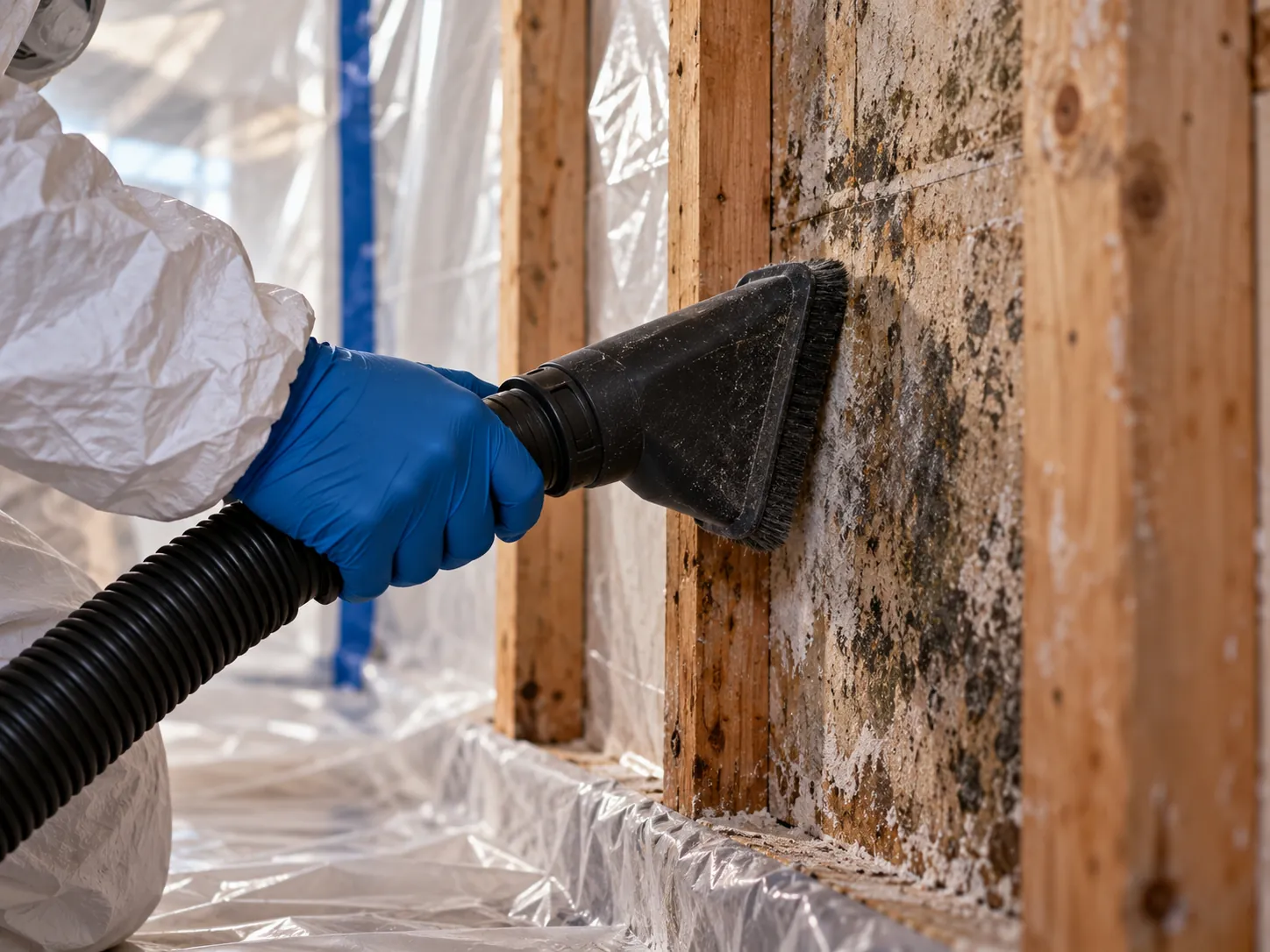
Colour is a poor guide to how serious it is
A few things matter more than what colour it happens to be.
- How much of it there is. A small, contained patch and a spreading colony behind a wall are very different jobs, regardless of species.
- What it's growing on. Porous material — drywall, insulation, some subflooring — generally has to be removed rather than cleaned, whatever colour the growth is.
- Whether the moisture source is still active. Any mold, dark-coloured or not, comes back if what's feeding it isn't fixed.
- Whether you need it documented. Lab testing to confirm species matters for an insurance claim or a property sale — not for deciding whether it needs removing, which is usually obvious once it's visible.
How it actually gets removed
Contained, removed or treated depending on the material, then checked before the containment comes down — the same process as any other mold removal job. Nothing about the colour changes any of those steps.
Questions about black mold
Is black mold more dangerous than other kinds?
Some published guides do list Stachybotrys chartarum — the species most often meant by "black mold" — as one of the more serious types when it comes to health effects. What matters for your home, though, is that you can't reliably identify a species by eye, and the removal process is the same regardless of which one it turns out to be. Treat any significant growth as worth addressing rather than trying to diagnose it visually.
How do I know if it's actually black mold or just dark-colored mildew?
Colour alone won't tell you. Mildew is a flat, surface-level fungus that wipes off a hard surface and rarely returns once the area stays dry; mold grows into whatever it's on and needs to be physically removed. The signs of mold vs. mildew guide covers how to tell them apart without guessing.
Should I get it tested to find out the exact species?
Only if you need it documented — for an insurance claim, a property sale, or a specific medical concern. Identifying the species doesn't change how it gets removed, so testing is about proof, not about deciding what to do next.
Free assessment, whatever colour it is
Describe what you're seeing and where — you'll get a straight answer on what it needs, without guessing at the species first.