Basement Mold Removal
The single most common place mold turns up in West Roxbury homes — and the reasons are specific to how this area's basements are actually built.
Why basements here are especially prone to it
A lot of West Roxbury's housing predates the 1960s and sits on fieldstone or rubble foundations rather than modern poured concrete. Those older foundations are more porous, and after heavy rain or the spring thaw, saturated ground pushes moisture through hairline cracks and mortar joints that a newer foundation simply wouldn't have. A basement that stayed dry for years can start showing damp with nothing about the house having changed — the ground around it changed instead.
The other common source is condensation rather than intrusion at all: warm summer air meeting a cool basement wall or slab, with no water actually entering the house. The service area page covers both patterns in more detail, including how to tell which one you're looking at.
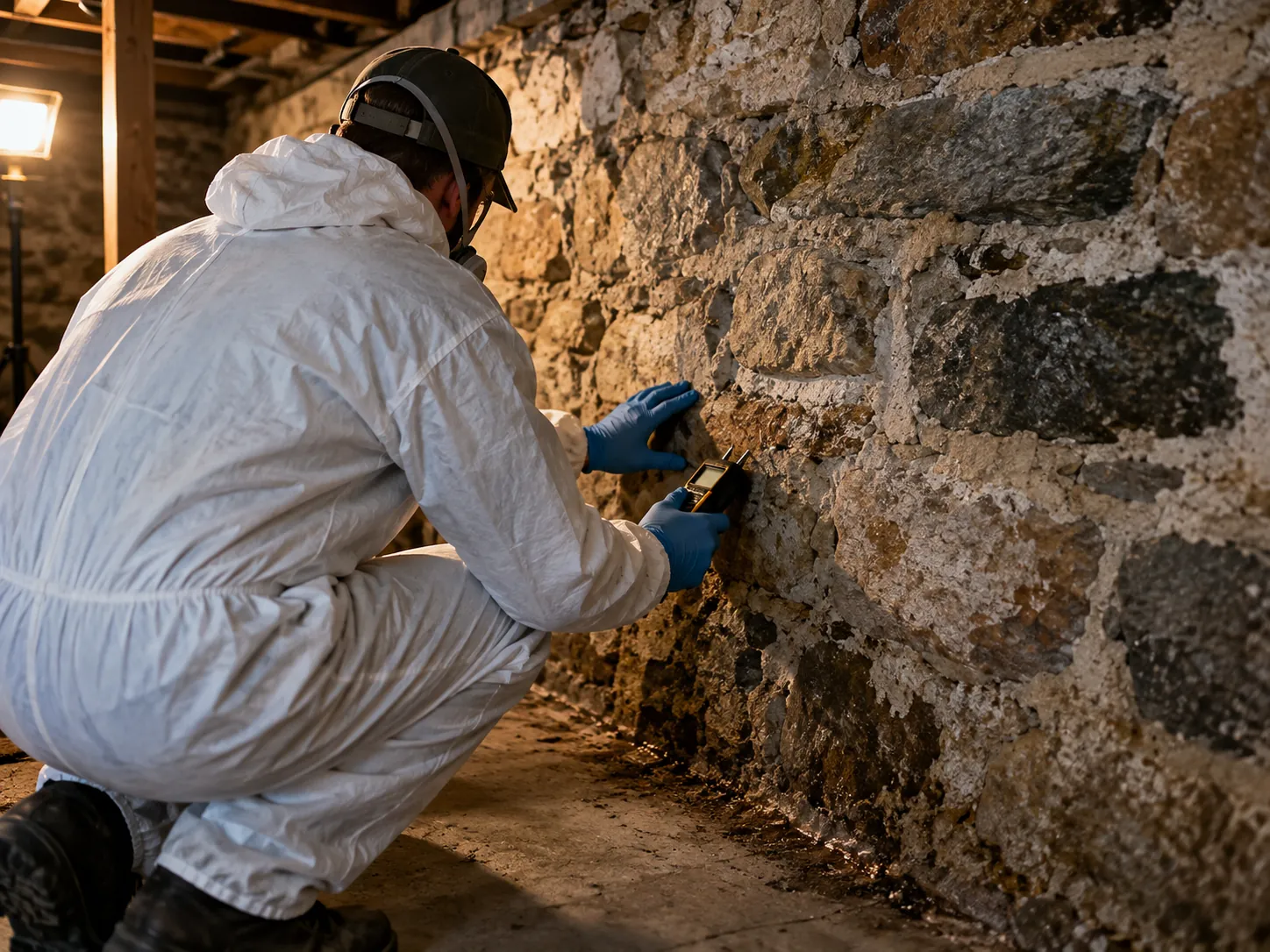
What's different about removal here
The removal process itself doesn't change room to room, but a few things about basements specifically affect how a job actually runs.
- Interconnected floor cavities. In older West Roxbury homes, the gap between a basement ceiling and the floor above tends to be more open than in newer construction, which gives spores an easier path upstairs if the area isn't properly contained before work starts.
- Finished basements usually mean more, not less. Drywall and carpet padding behind a finished wall absorb moisture in ways bare concrete doesn't, and that damage is often invisible until the finished surface is opened up.
- The moisture source is frequently outside the house. Grading that slopes toward the foundation, gutters that discharge too close to it, or a sump pump that can't keep up are the usual culprits — removing the growth without addressing one of these is why the same wall sometimes gets treated twice.
- Sump pump condition matters. A pump without battery backup fails exactly when it's needed most, during a power outage in a storm — worth checking as part of any basement assessment, not just the visible mold itself.
How the work actually gets done
Containment first, then removal and treatment of affected material, then a clearance check before the work area is opened back up. That's the same process regardless of which room it's in — the mold removal page walks through each step in detail.
What changes in a basement specifically is scope: how much of the perimeter is affected, whether the finished surfaces need to come off to get at what's underneath, and whether the water source itself needs correcting alongside the removal.
Questions about basement mold
Is basement mold always from a flood or leak?
No — condensation is just as common a cause, and doesn't involve any water actually entering the house. Warm humid air meeting a cool basement wall or slab condenses on it, and given enough time that dampness supports growth on its own. The two causes need different fixes, which is why identifying which one you're dealing with comes before treating anything.
Can I just run a dehumidifier instead of getting it removed?
A dehumidifier addresses ambient humidity, which helps prevent new growth — it does nothing to remove mold that's already established, and it won't fix a real water-entry problem if that's the actual cause. Treat it as prevention once the existing growth has been dealt with, not a substitute for removal.
Does a finished basement change anything?
It usually means more removal, not less. Drywall, carpet padding and framing behind finished walls all absorb moisture and mold in ways a bare concrete basement doesn't, and a lot of that damage isn't visible until the finished surface comes off. An unfinished basement is often the more straightforward job of the two.
Free assessment for your basement
Describe what you're seeing — including whether there's been any recent rain, flooding or a known leak — and you'll get a straight answer on what it actually needs.