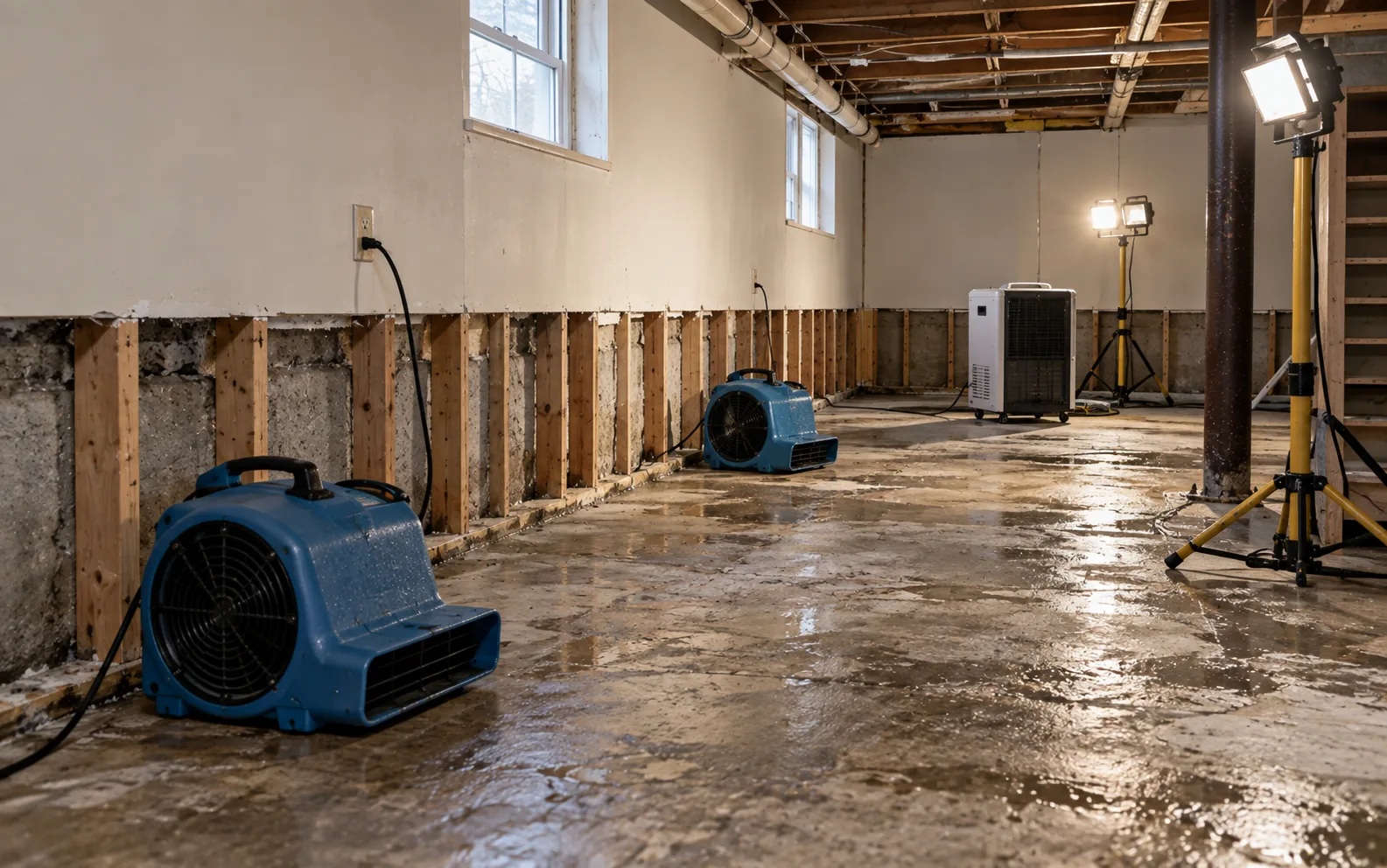
The 24–48 hour window
Mold can begin growing on wet drywall within roughly 24 to 48 hours of water exposure. If a basement floods and is properly dried inside that window — water removed, wet materials out, air moving — there is a real chance of avoiding a mold problem altogether. Past it, particularly with drywall or carpet padding, assume some growth has started and plan accordingly.
This is one situation where speed genuinely changes the outcome, so the sequence below is ordered deliberately.
First: work out what kind of water it is
This determines everything that follows, and it is worth establishing before you start moving things.
Clean water from a burst supply line or an overflowing appliance intake carries the lowest risk and is the most straightforward to handle yourself.
Grey water from a washing machine, dishwasher or similar contains detergents and organic matter. Porous items it has soaked are usually not worth saving.
Black water — sewage backup, or flooding that came in from outside across the ground — carries contaminants that need professional handling. Don’t attempt this one yourself, regardless of how small the area is. Storm water entering from outside counts as black water even when it looks clean.
Then: remove water and wet material
Get standing water out as fast as you can manage. After that the priority is removing porous material rather than trying to dry it in place: cardboard, carpet and its padding, upholstered furniture, and anything made of particleboard. These hold water far longer than they appear to and are the most common places growth starts.
Drywall is the judgement call. Water wicks upward inside it well above the visible waterline, and insulation behind it stays wet long after the surface feels dry. Where drywall has been soaked for more than a day or two, cutting it back above the wet line is usually the right call.
Lift anything salvageable off the floor and away from walls so air can reach all sides of it.
Then: dry properly, not briefly
Run fans and a dehumidifier continuously, not just overnight, and open interior doors so air circulates through the space rather than around one corner of it.
Resist closing things up early. Materials need to reach a stable moisture level, not merely feel dry to the touch — surfaces dry long before the material behind them does, and sealing a wall back over damp framing is the most common way a flood becomes a mold job several weeks later.
Counter-intuitively, opening basement windows on a warm humid day can slow drying rather than help it, because you are introducing moist air to a cool space. In summer, a dehumidifier in a closed basement usually outperforms ventilation.
Document as you go
Photograph everything before you move or remove it — standing water, the waterline on walls, affected belongings, and the source if you can identify it. Insurers generally ask for this and it cannot be reconstructed afterwards. Whether any of it is covered depends on the cause and on your specific policy, which is a conversation to have with your insurer early rather than after the cleanup.
When to call rather than continue
Bring someone in if the water was black water, if more than about two days have passed and you still smell must, if drywall near the floor still feels damp after several days of drying, or if staining starts appearing above the original waterline.
Given how much of West Roxbury’s housing stock predates the 1960s and sits on porous fieldstone or rubble foundations, a basement that floods once is often saying something about drainage rather than reporting a freak event. Once the immediate cleanup is done, moisture control addresses the reason it happened — and if growth has already taken hold, remediation handles that side.