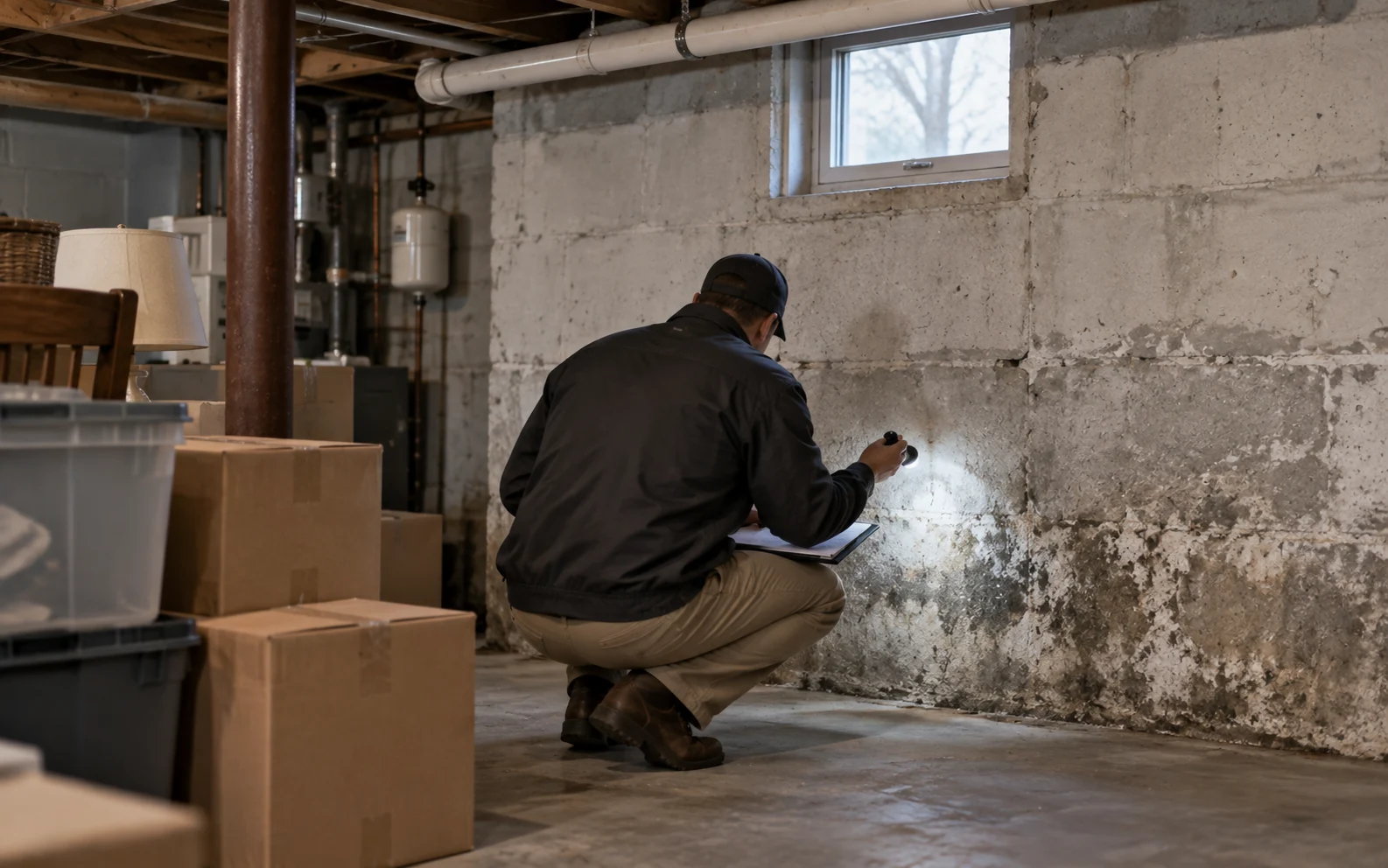
For most homeowners, lab testing is not worth paying for. If growth is visible, sampling rarely changes what needs to happen, because safe removal follows the same procedure regardless of species. A property transaction is the main exception — not because the mold is different, but because the audience is.
Why a transaction changes the calculation
Outside a sale, the only person who needs to be satisfied is you, and your own eyes are usually sufficient evidence. In a sale there are several parties who were not present and will not take anyone’s word for it: a buyer, their agent, a lender in some cases, and potentially an insurer. What they need is a documented record — what was found, where, how far it extended, what was done about it, and what the condition was afterwards.
That record is what testing and written findings produce. It is a paperwork requirement far more than a technical one.
What tends to get asked for
A written scope and findings from the initial assessment: what was identified, its extent, and the moisture source behind it. The cause matters here, because a buyer’s real question is usually “will this come back”, not “was it cleaned”.
Photographic documentation through the work, not just at the end. Once material has been removed and replaced, nothing visible remains to demonstrate what was addressed.
Post-remediation verification once the work is complete. This is where independence becomes important — verification carried out by a party other than the company that performed the remediation carries considerably more weight with a buyer than a self-certification. It is worth arranging before the job is closed out, not after the containment has come down.
Timing is the thing people get wrong
The common sequencing error is discovering the problem during the inspection contingency and then trying to compress assessment, remediation, drying and verification into the days remaining. Drying in particular does not compress — materials have to reach a stable moisture level before an area is closed up, and rushing that stage is a frequent reason a problem reappears after closing.
If you are selling and you already suspect something — a musty basement, a past leak, staining anyone could see — dealing with it before listing is nearly always less disruptive than negotiating over it mid-transaction, when the other side sets the deadline.
If you are the buyer
A general home inspection is not a mold inspection. Inspectors routinely flag visible staining or elevated moisture readings and then recommend a specialist, because assessing extent behind surfaces is outside their scope.
What is worth understanding before you treat a finding as a dealbreaker: visible growth in a basement of an older home is common rather than exceptional, and is frequently traceable to a fixable moisture source such as grading, gutters or drainage. The useful questions are how far it has spread, what is feeding it, and what correcting the source would involve — not simply whether any was found.
About disclosure
Disclosure obligations vary by state and by the specifics of a transaction, and they are a question for your real estate attorney or agent rather than a remediation company. What we can say is the practical part: keeping the assessment findings, the scope of work, the photographs and any verification results together in one place makes whatever disclosure you do owe considerably easier to satisfy.
The short version
Testing earns its cost here because you need to convince someone who wasn’t there. Outside that situation — and outside an insurance claim, or a specific medical reason to confirm exposure — an inspection that establishes extent and cause is usually the more useful spend, and the cost guide explains how adding sampling changes the total.